Yoav Y. Schechner: Research


Clear Underwater Vision
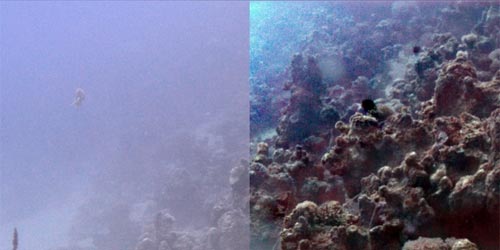
Underwater imaging is important for scientific research and technology as well as for popular activities, yet it is plagued by poor visibility conditions. We present a computer vision approach that removes degradation effects in underwater vision, under natural illumination. We analyze the physical effects of visibility degradation. The main degradation effect is backscatter (veiling light, path radiance), and it can be associated with partial polarization of light. Thus, we present an algorithm, which inverts the image formation process, thereby recovering good visibility.
The algorithm is based on a couple of images taken through a polarizer at different orientations. As a by-product, a distance map of the scene is also derived. We successfully demonstrated our approach in experiments conducted in the sea. In addition, we analyzed the noise sensitivity of the recovery. The noise is amplified as a function of the object distance. Hence, in a recent paper, we propose a regularization method that adapts to the mentioned distance map.
Publications
- Yoav Y. Schechner and Nir Karpel, “Clear underwater vision,” Proc. IEEE CVPR, Vol. 1, pp. 536-543 (2004).
- Yoav Y. Schechner and Nir Karpel, “Recovering scenes by polarization analysis,” MTS/IEEE OCEANS, pp. 1255-1261 (2004).
- Yoav Y. Schechner and Nir Karpel, “Recovery of underwater visibility and structure by polarization analysis,” IEEE Journal of Oceanic Engineering , Vol. 30 , No. 3 , pp. 570-587 (2005).
- Tali Treibitz and Yoav Y. Schechner, “Instant 3Descatter,” Proc. IEEE CVPR, Vol. 2, pp. 1861-1868 (2006).
- Yoav Y. Schechner and Yuval Averbuch, “Regularized image recovery in scattering media,” IEEE Trans. Pattern Analysis & Machine Intelligence, Vol. 29 , No. 9 , pp. 1655-1660 (2007). ©
Data
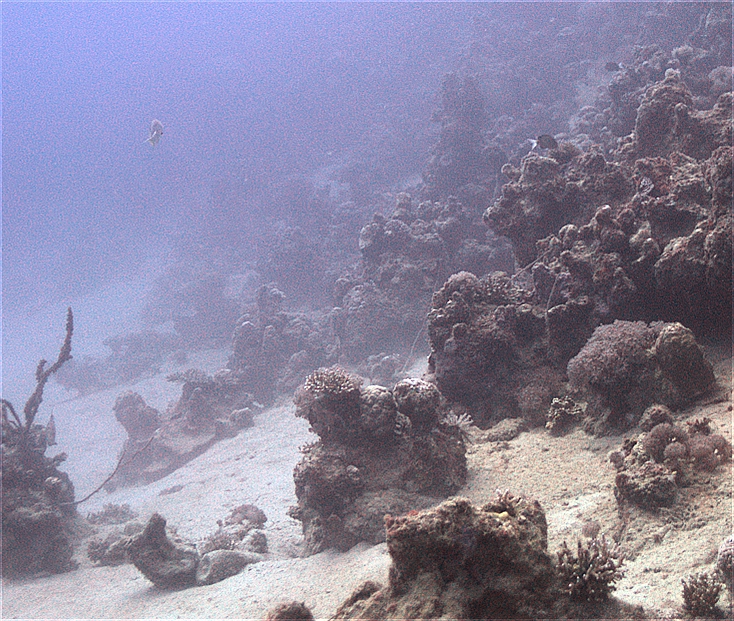
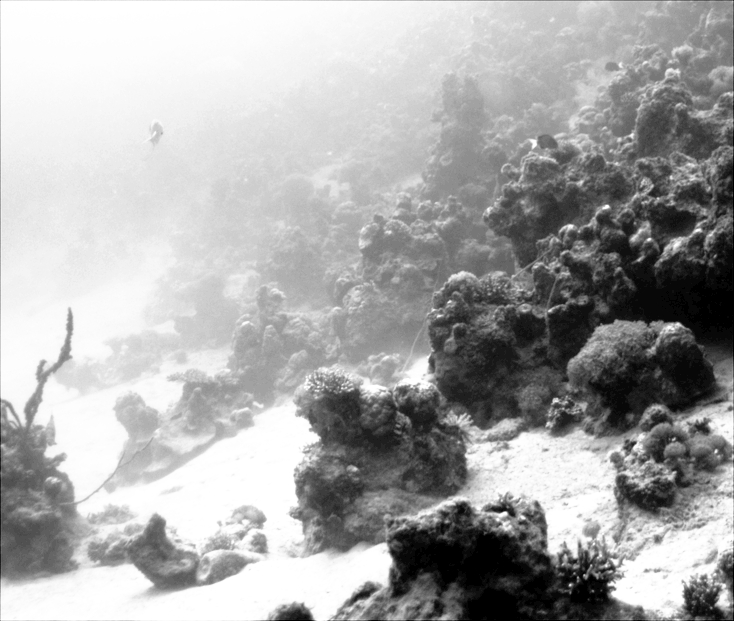
Images used as described in our papers. Available for non-commercial use. You can use the data while clearly acknowledging the source by citing "Regularized image recovery in scattering media" detailed above, in your work.- Images captured by a Nikon D100 in Eilat using a mounted linear polarizing filter an a submerged camera housing (14 MB). Corresponding to the backscatter, the best state has minimal intensity, while the worst state has maximal intensity.
In the Press
This research topic has been widely covered in the press.Related Research
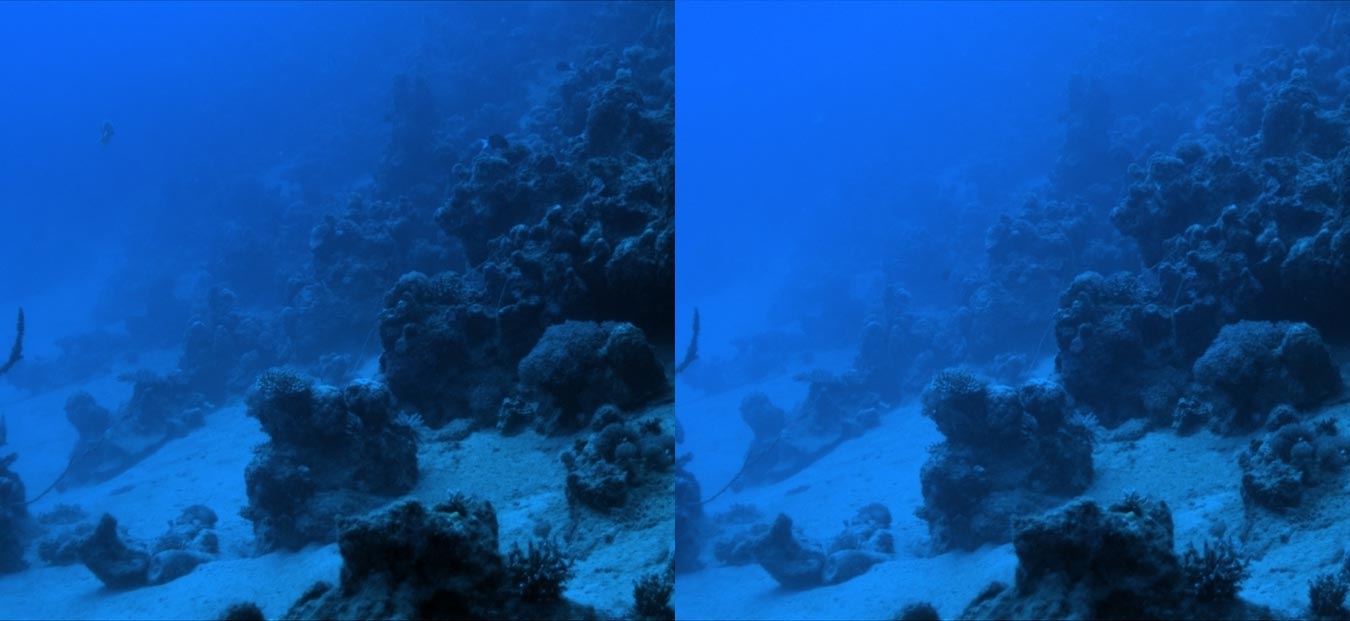 Raw images taken through a polarizer
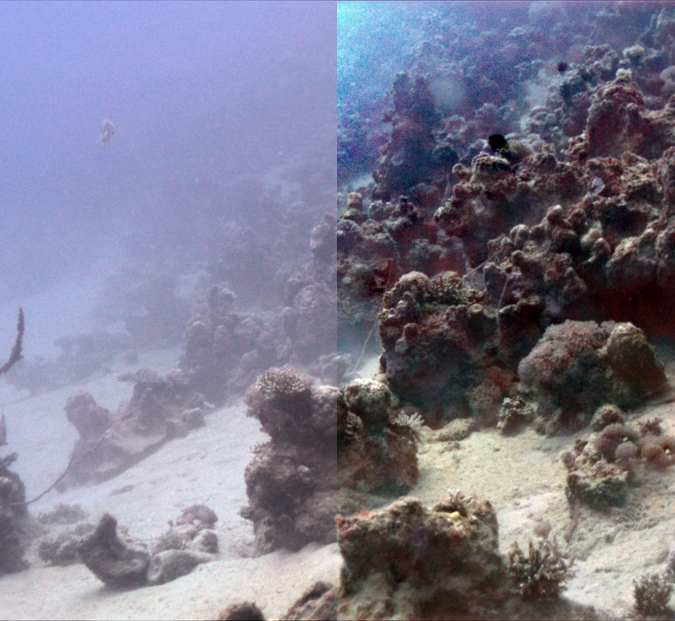 The recovered image is much clearer, especially at distant objects, than a naive white-balancing attempt.
 Raw images
 Again, the recovered image is much clearer than a naive white-balancing attempt.
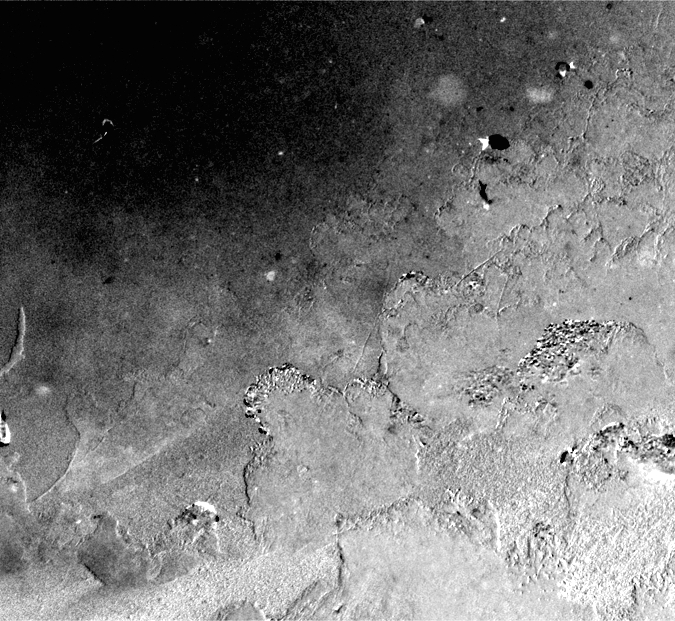
Links for seeing results of unsharp masking and histogram equalization of visibility degraded images.